Beyond Closed Wave Systems: Non-Hermiticity and Nanoscale Casimir Effect
by
TDLI Meeting Room N600 (East Wing of Floor 6, North Building)
The classical wave system has demonstrated itself as an excellent platform to realize novel phenomena that may be challenging to implement in other physical systems experimentally. The bedrock principle is the macroscopic quantities obtained from the homogenization or mean-field treatment. However, it usually deals with Hermitian problems and averages out fluctuations. Therefore, the presentation will cover two topics: non-Hermitian (NH) physics and nano Casimir effect. The first part will focus on the spectral topology, which deals with complex energy patterns and their interplay with the wavefunction. We begin with geometry-dependent skin effect (GDSE). Its realization in the reciprocal system requires mismatching macroscopic symmetry mismatches with lattice symmetry, highlighting the role of geometry in higher-dimensional NH physics. Next, we devote ourselves to discussing the order-3 exceptional lines (EL3s) embedded in order-2 exceptional surfaces (ES2s). The eigenvalue winding number becomes poorly defined, so we adopt the resultant manifold to detect only the EL3 but ignore the ES2, which allows the diagnosis of topological currents of the EL3s, enabling the prediction of their evolution under perturbations. The second part will discuss the influence of the metal's surface electrons on Casimir forces. A three-dimensional conformal map method has been established by embedding mesoscopic boundary conditions of electromagnetic fields. We uncover that surface electrons can either enhance or suppress the nanoscale Casimir force, depending on materials and crystal facets. The mechanism is demonstrated to be the Casimir force softening, which results from surface electrons effectively altering the distance seen by the Casimir interaction.
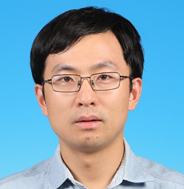
Dr. Kun Ding is an Associate Professor at the Department of Physics, Fudan University, starting in Jan. 2021. He got his B.Sc. and Ph.D. in 2008 and 2013 from the Department of Physics, Fudan University. Before joining Fudan University as a faculty, he worked at Imperial College London as a Research Associate from 2019 to 2020 in Prof. Sir John Pendry's group and at Hong Kong University of Science and Technology from 2013 to 2018 as a Post-doctoral Fellow and Research Assistant Professor in Prof. C. T. Chan's group. His research focuses on non-Hermitian physics, plasmonics, Casimir effects, and related topics.
Tencent Meeting link: https://meeting.tencent.com/dm/btPU2Aa8WeqH Meeting ID: 764 508 455, no password