Quantum Entanglement and Beyond
by
S541 Lecture Hall, TDLI
Driven by the initial curiosity of “spooky action at a distance” referred by Einstein, in the last few decades, many ground-breaking technologies were developed for coherent manipulation of quantum systems. This consequently leads to the emerging quantum information sciences including quantum communication and quantum computation. While quantum communication can ensure secure information exchange, quantum computation can greatly enhance the computing power.
Over the past three decades, the promises of super-fast quantum computing and secure quantum cryptography have spurred a world-wide interest in quantum information, generating fascinating quantum technologies for coherent manipulation of individual quantum systems. However, the distance of fiber-based quantum communications is limited due to intrinsic fiber loss and decreasing of entanglement quality. Moreover, probabilistic single-photon source and entanglement source demand exponentially increased overheads for scalable quantum information processing. To overcome these problems, we are taking two paths in parallel: quantum repeaters and through satellite. Based on these techniques, we are developing quantum repeaters that combine entanglement swapping, entanglement purification, and quantum memory for the ultra-long distance quantum communication. The second line is satellite-based global quantum communication, taking advantage of the negligible photon loss and decoherence in the atmosphere. The quantum science satellite ‘Micius’ was launched in 2016, and accomplished High-rate QKD between satellite and ground, quantum entanglement distribution from satellite and quantum teleportation from ground to satellite, for the first time. Interestingly, the systematic technologies developed in quantum communications, including high-performance quantum light sources, phase locking, mode matching, and photon detection techniques, also make quantum computation advantage feasible.
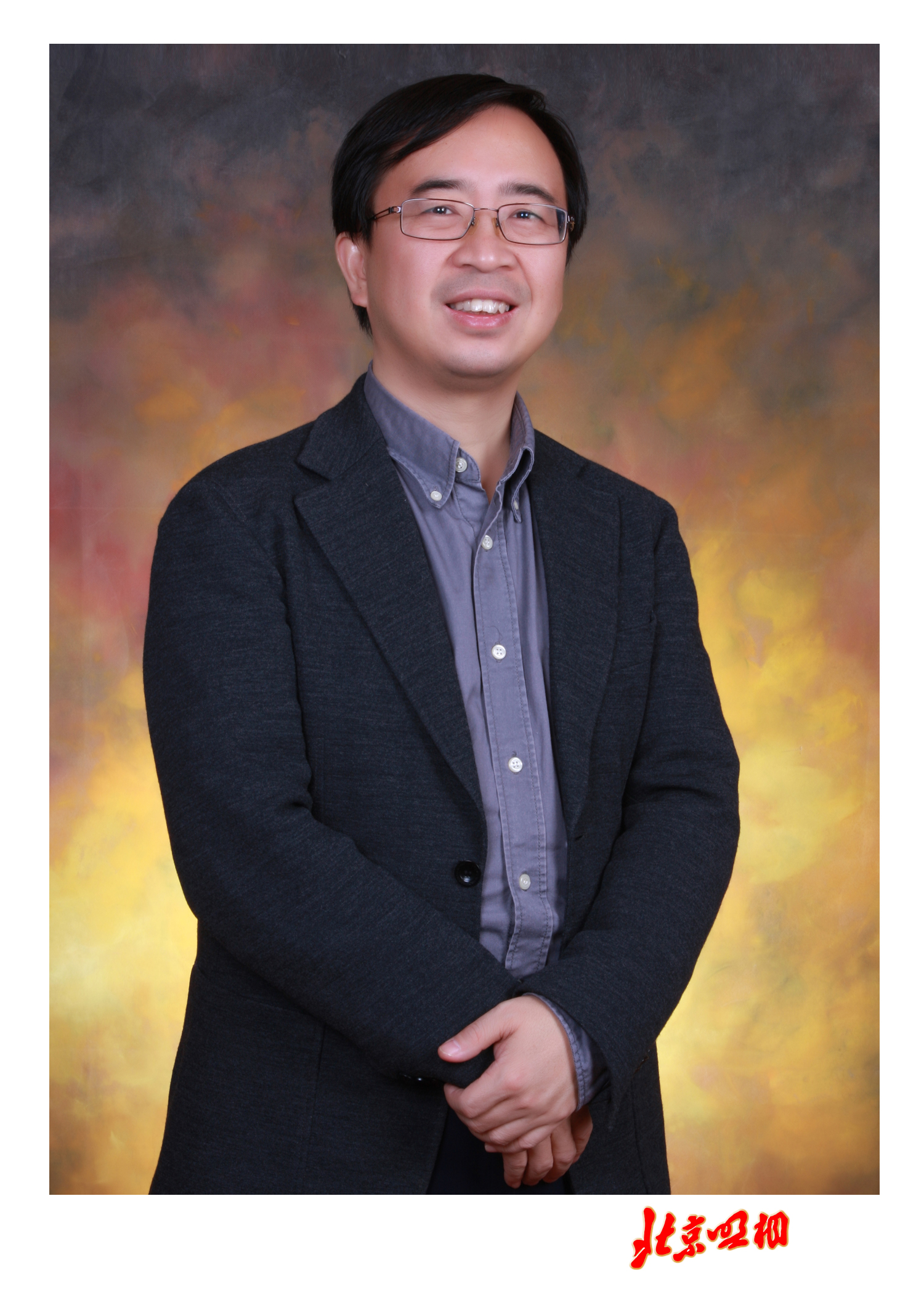
Jian-Wei Pan, born in 1970, received his Bachelor (1992) and Master (1995) in Physics from the University of Science and Technology of China, Hefei, and his PhD (1999) from the University of Vienna. He is currently a Professor of Physics of the University of Science and Technology of China, an Academician of Chinese Academy of Sciences (CAS), and a Fellow of the World Academy of Sciences (TWAS). He serves as the Director of the CAS Center for Excellence in Quantum Information and Quantum Physics, and the Chief Scientist for the Quantum Science Satellite Project. Jian-Wei Pan’s research fields focus on quantum foundations, quantum optics and quantum information. He has authored more than 300 articles which have attracted more than 61000 citations (Google scholar). Pan has won Fresnel Prize from European Physical Society, Quantum Communications Award, First Prize of National Prize for Natural Sciences of China, Future Science Prize in Physical Sciences, Willis E. Lamb Award for Laser Science and Quantum Optics, Newcomb Cleveland Prize form American Association for the Advancement of Science, R. W. Wood Prize from Optical Society of America, Micius Quantum Prize and Zeiss Research Award, and was selected by Nature as “people of the year” in 2017 who “took quantum communication to space and back”.